Cloud and platform
The internal platform now serves teams and agents
Golden paths, self-service and policies for organizations where people and agents consume the same platform.
The central idea
Start with one complete journey teams repeat. The portal and the agent should consume the same operational contract.
An internal platform becomes valuable when it is the preferred operational path to create, deploy, observe and retire software. Its job is to reduce repeated decisions and cognitive load, not to collect tools.
Agents as consumers require machine-readable contracts: stable APIs, declarative policies, queryable state and idempotent operations matter as much as a developer portal.
A shared golden path
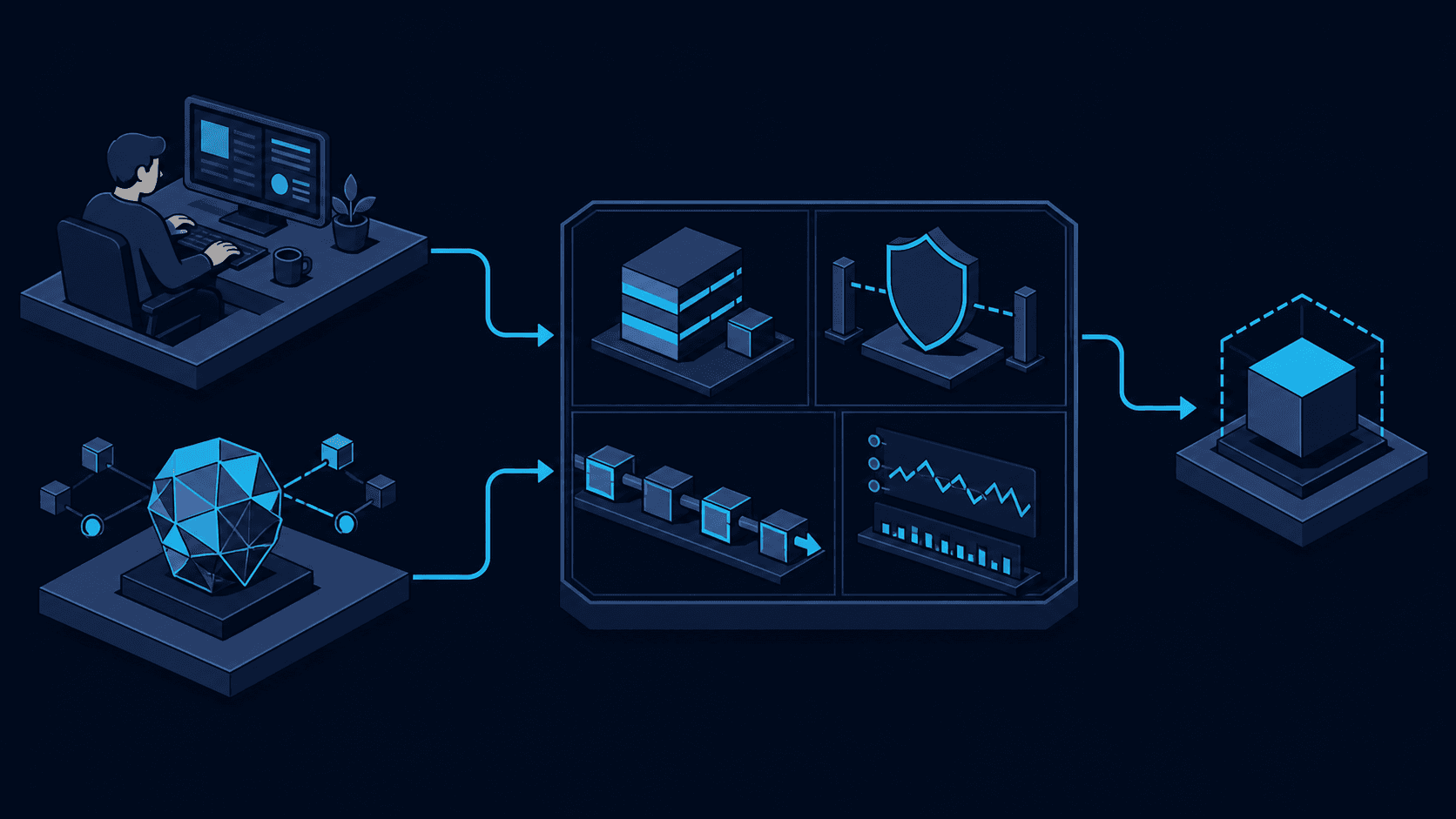
A useful pattern combines versioned templates, GitOps, supply-chain controls, observability and role-based permissions. Teams retain autonomy inside known boundaries.
Measure the platform as a product through onboarding time, deployment frequency, failure rate, golden-path adoption and developer satisfaction.
Build a product, not a portal
The portal may be the front door, but the real product includes contracts, automation, documentation, support and evolution. Platform teams should research the journeys that create the most friction and turn them into capabilities with an owner, service level and documented escape route.
Contracts agents can understand
Agents need deterministic operations: versioned schemas, queryable states, actionable errors and idempotency. A request to create a service should produce reviewable changes —repository, manifests and pull request— instead of mutating infrastructure without evidence.
Guardrails without turning them into tickets
Policies work best as early validation and safe defaults. Workload identity, managed secrets, scanning, quotas and observability can be part of the recommended path. Exceptions remain possible, but they become explicit decisions with an owner and expiration date.
Measure adoption and outcomes
The metric is not how many templates were published. Track time to first deployment, services on the golden path, delivery frequency, change failures and time spent on avoidable operations. Developer satisfaction completes the quantitative view.
Teaching case
A preview environment without four tickets
A team needs a temporary URL for a branch. Instead of separate infrastructure, permission, configuration and cleanup requests, offer a complete journey: accept a code reference, build an artifact, deploy with test data and return a URL with an expiration date.
Return an operation ID immediately. Both a portal and an agent can follow pending, building, available, failed and retired states. A failure should distinguish policy, capacity and build problems and explain the next action.
If teams keep using their own scripts, investigate missing secrets, migrations, representative data or startup time. Exceptions reveal gaps in the platform product. Mandating adoption before addressing those gaps pushes work into less visible channels.
Choices and their tradeoffs
| Situation | Choice | Tradeoff |
|---|---|---|
| Repeated, predictable need | Provide a versioned template. | The platform owns maintenance and migration. |
| Long operation | Return an ID and queryable state. | Define cancellation and recovery. |
| Unsupported case | Record an owned exception. | Frequent exceptions indicate product gaps. |
Scroll the table to compare all three columns.
Put it into practice
Validate one journey with a pilot team
- Observe environment creation and removal without coaching.
- Record waits, manual steps and requests for help.
- Repeat through the API and compare policy enforcement.
What to verify: The team obtains a useful environment, understands failures and can retire it without hidden platform knowledge.
The platform as an organizational interface
A strong platform concentrates difficult decisions and returns autonomy. When people and agents use the same contract, the organization gains speed without creating two operating models that cannot be governed.
Continue reading
Cloud and platform
FinOps on Azure: from monthly cost to product value
An operating cycle to allocate spend, detect waste and make technical decisions with business context.
Cloud and platform
OpenTelemetry: observability without vendor lock-in
How to connect traces, metrics and logs around operational questions instead of decorative dashboards.